
Centipedes in Alabama
Fast, many-legged, and unnerving — house centipedes show up in damp Alabama bathrooms and basements. The good news: they’re a sign of a fixable moisture-and-prey problem.
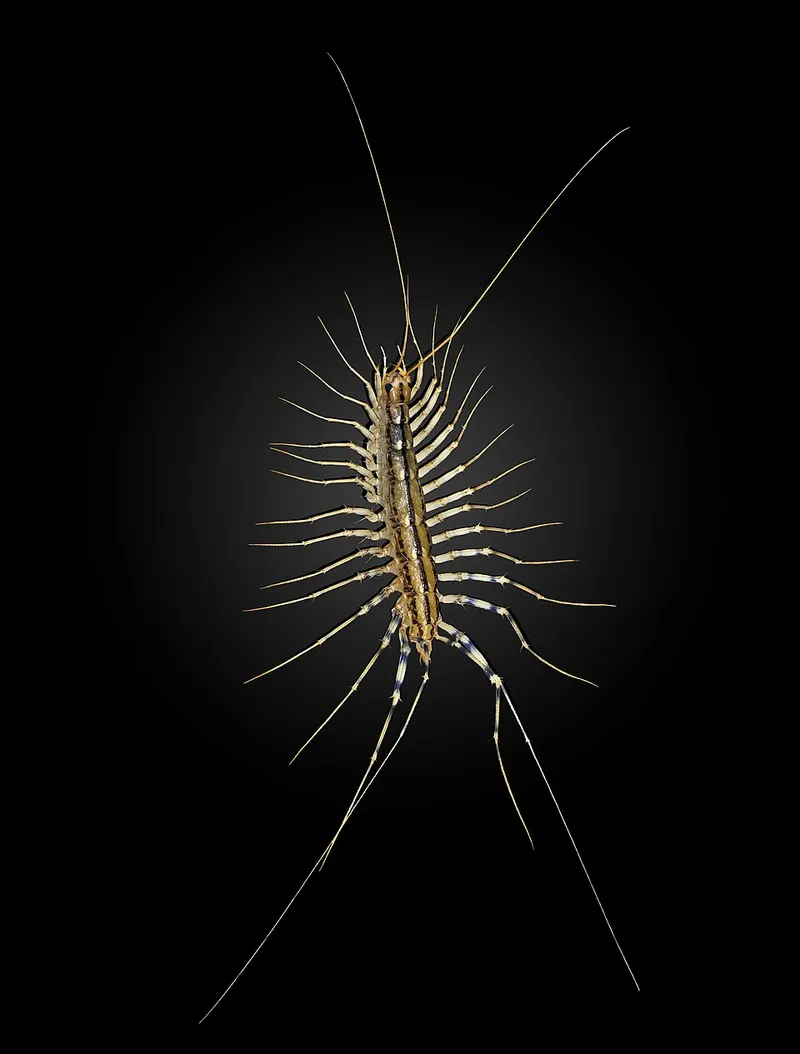
How to identify centipedes
House centipedes are grayish-yellow, about 1"–1.5" long, with 15 pairs of very long legs and a darting, lightning-fast movement. Their long legs and antennae give them a "fringed" look as they scurry across walls and floors.
Behavior in Alabama
Centipedes are predators that hunt other small insects — silverfish, roaches, spiders. They need humidity and live in damp basements, crawlspaces, bathrooms, and under landscaping. Where their prey thrives, they follow.
Why centipedes are a problem
Signs of centipedes activity
- Fast, many-legged insects in bathrooms/basements
- Activity in damp, dark areas
- Presence of prey insects like silverfish & roaches
- More common in homes with crawlspace moisture
When they’re active
Indoors year-round in damp areas; more noticeable in humid summer and when outdoor conditions push them inside.
How EnviroCare controls centipedes
Because centipedes are predators, EnviroCare controls them by reducing the insects they feed on, treating damp harborage with EPA-registered products per label, and flagging the moisture conditions (often crawlspace-related) that sustain the whole chain.
See our Pest Control service →Common questions
Are house centipedes dangerous?
They’re essentially harmless to people — they rarely bite and prefer to flee. They’re mostly a nuisance and a sign of moisture plus other insects to address.
Why do I keep seeing centipedes?
They follow their prey and moisture. Controlling the insects they eat and reducing dampness — along with treatment — is the lasting fix.
Dealing with centipedes? Let’s handle it.
Family-owned in Alabama since 1958. Licensed technicians, EPA-registered products applied exactly as the label directs. Terms are confirmed in writing before service starts.