
Mosquitoes in Alabama
Alabama’s long, wet, warm season makes mosquitoes relentless. Here’s how they breed, the risk they carry, and how a yard barrier wins back your evenings.
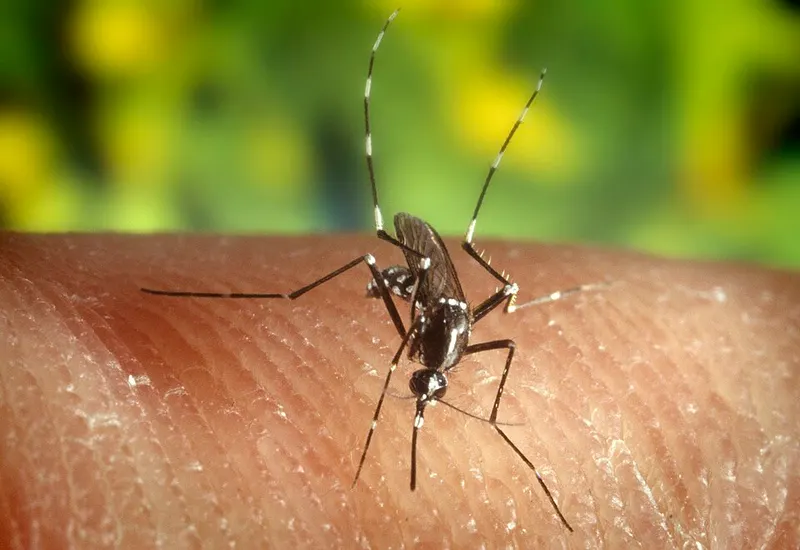
How to identify mosquitoes
The Asian tiger mosquito — small, black, with white-striped legs — is an aggressive daytime biter common across Alabama. The southern house mosquito is more active at dusk and dawn. Both develop from larvae in standing water.
Behavior in Alabama
Mosquitoes need only a bottle-cap of standing water to breed — gutters, plant saucers, tarps, and toys. Adults rest in shaded, humid harborage: shrubs, tall grass, under decks, and along fence lines. They rarely travel far from where they hatched.
Why mosquitoes are a problem
Signs of mosquitoes activity
- Daytime biting (Asian tiger) or dusk swarms
- Activity near standing water & shaded shrubs
- Larvae ("wigglers") in containers of water
- Heaviest pressure near wooded or lakefront lots
When they’re active
Alabama’s mosquito season runs roughly March through October — we recommend starting treatments early rather than waiting for the first bites.
How EnviroCare controls mosquitoes
EnviroCare applies a 30-day yard barrier to the shaded harborage where adults rest, with EPA-registered products per label, and identifies standing-water breeding sites to address. Service runs monthly through the season, with free re-treatment between scheduled visits. Tick protection can be added to any mosquito visit.
See our Mosquito Control service →Common questions
When should I start mosquito service in Alabama?
Starting in March — before populations build — is far more effective than waiting until summer. Early-season treatment knocks down the first generations before they multiply.
Will treatment get rid of every mosquito?
Mosquito service substantially reduces the population resting in your yard; it controls rather than eliminates. Pairing treatment with removing standing water gives the best result.
Dealing with mosquitoes? Let’s handle it.
Family-owned in Alabama since 1958. Licensed technicians, EPA-registered products applied exactly as the label directs. Terms are confirmed in writing before service starts.