
Termites in Alabama
Subterranean termites are the costliest pest in Alabama — quiet, hidden, and active year-round in our climate. Here’s what to watch for and how Sentricon® protects your home.
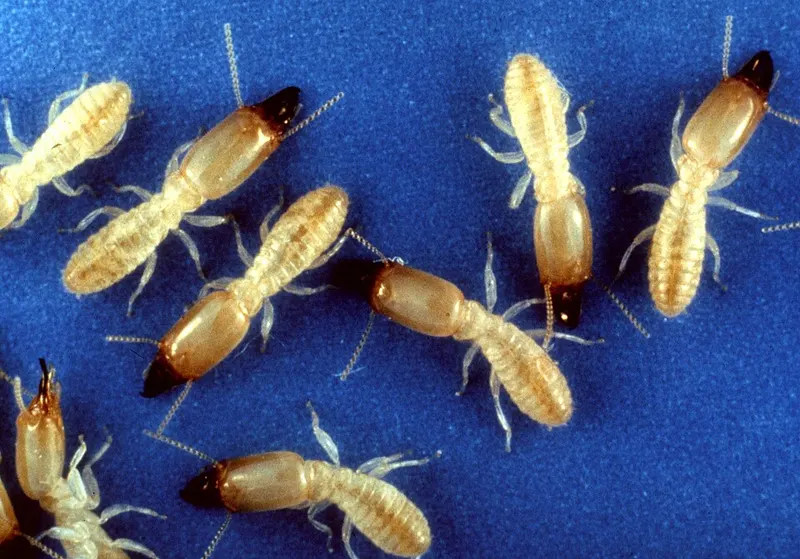
How to identify termites
Subterranean termite workers are pale, soft-bodied, and rarely seen. Swarmers (reproductives) are dark with two pairs of equal-length wings — often mistaken for flying ants, but termites have a straight waist and straight antennae. Discarded wings on a windowsill are a classic giveaway.
Behavior in Alabama
These termites live in the soil and tunnel up into wood through pencil-width mud tubes along foundations, piers, and crawlspaces. Alabama’s warm, humid climate keeps them feeding nearly all year, hidden behind drywall and inside framing.
Why termites are a problem
Signs of termites activity
- Pencil-width mud tubes on foundations or crawlspace piers
- Discarded wings near windows & doors after a swarm
- Hollow-sounding or blistered wood
- Spring swarms of dark, equal-winged insects
When they’re active
Swarms typically occur in spring (often after warm rain), but subterranean termites feed year-round in Alabama — protection should not be seasonal.
How EnviroCare controls termites
EnviroCare installs the Sentricon® Always Active™ bait-station system around the structure — no drilling and no tank trucks. Colonies feed on the stations and decline over time, and the system stays active for ongoing monitoring. Eligible homes carry up to $1,000,000 in damage repair coverage, subject to the terms of the agreement. Every plan starts with a free WDO inspection.
See our Termite Control service →Common questions
How do I know if I have termites or flying ants?
Termite swarmers have a straight waist, straight antennae, and four equal-length wings. Flying ants have a pinched waist, bent antennae, and front wings longer than the back. Discarded wings on a sill point to termites.
Does Sentricon® require drilling into my slab?
No. Sentricon® stations are installed in the soil around the home — no drilling through concrete and no trenching with tank trucks.
Dealing with termites? Let’s handle it.
Family-owned in Alabama since 1958. Licensed technicians, EPA-registered products applied exactly as the label directs. Terms are confirmed in writing before service starts.