
German Cockroaches in Alabama: German Cockroach Infestation, Roach Control, and Pest Control
German cockroaches are one of the most common cockroach species found in Alabama homes — and one of the hardest household pests to get rid of. Unlike the large American cockroach or smokybrown cockroach that wanders in from outside, the German cockroach lives its entire life indoors, breeds faster than any other roach in the state, and hides in cracks and crevices that sprays never reach.
German cockroaches are one of the most common cockroach species found in Alabama homes — and one of the hardest household pests to get rid of. Unlike the large American cockroach or smokybrown cockroach that wanders in from outside, the German cockroach (Blattella germanica) lives its entire life indoors, breeds faster than any other roach in the state, and hides in cracks and crevices that sprays never reach. A single female German cockroach can produce hundreds of nymphs in a year, and by the time you see one in daylight, a German cockroach infestation is already established behind your kitchen cabinets and appliances. Learn how to identify German cockroaches, what attracts them to Alabama homes, the signs of a German cockroach infestation, and what professional pest control actually does to get rid of German cockroaches for good.
How to identify German cockroaches in your Alabama home
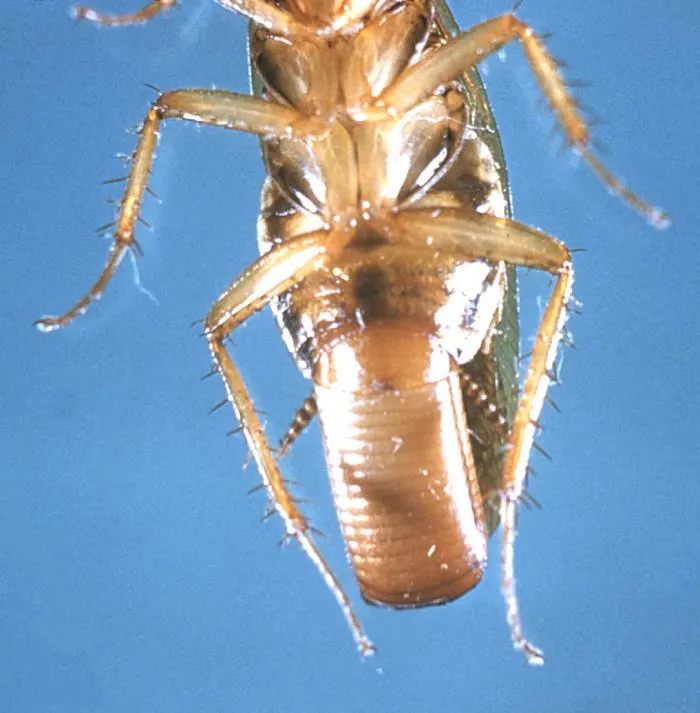
Adult German cockroaches are about half an inch long — roughly the size of a fingernail — light brown or tan, with two dark stripes running lengthwise on the shield behind the head. Those two dark parallel stripes are the most reliable feature to identify German cockroaches. German cockroaches have wings but rarely fly. The nymphs are smaller and darker, almost black, with a pale stripe down the middle of the back. You will see German cockroaches in the kitchen and bathroom, almost never in the living room or garage — they stay close to food and water sources.
Compare the German cockroach to the two outdoor cockroach species Alabama homeowners commonly confuse them with:
- American cockroach ("palmetto bug") — reddish brown, an inch and a half or longer, flies, and lives in sewers, crawl spaces, mulch, and storm drains. Comes indoors in summer heat or after heavy rain but does not establish permanent indoor cockroach populations.
- Smokybrown cockroach — dark mahogany, about an inch long, attracted to porch lights, lives in tree holes, gutters, and attics. A common cockroach species in Alabama but primarily an outdoor pest.
Those two are a perimeter problem and the bi-monthly exterior program handles them. The German cockroach is an interior infestation that needs interior cockroach control — different treatment, different approach.
Why German cockroach infestations spread so fast
German cockroaches reproduce so quickly that they outpace every other cockroach species found in Alabama homes. Three factors explain why a small German roach problem in March becomes a serious cockroach infestation by June.
The egg case. A female German cockroach carries her egg case — called an ootheca — until the nymphs are nearly ready to hatch, protecting it from most insecticide treatments. Each egg case holds thirty to forty eggs at a time, and a single female can produce several oothecae in her lifetime. One female German cockroach can generate thousands of roaches within a year under kitchen conditions.
They hide where sprays cannot reach. German cockroaches are nocturnal and spend the day hiding in cracks and crevices close to warmth, moisture, and food sources: the gap between the stove and the cabinet, behind the refrigerator compressor, inside the hinge side of a cabinet door, under the sink around plumbing, inside the dishwasher door panel, behind appliances and inside kitchen cabinets. A can of spray hits the open floor while the roaches hide two inches away inside a void. Cockroaches hide in spots that over-the-counter sprays simply cannot reach.
Insecticide resistance. German cockroach populations have developed resistance to several common insecticide classes over decades of exposure. Some cockroach populations have even learned to avoid the sugar used in older gel bait formulations. Cockroaches can develop resistance faster than most household pests because of their rapid reproduction cycle and the sheer size of cockroach populations in an established infestation. This is why the products at the checkout aisle so often disappoint — and why professional cockroach control with rotating bait formulations and integrated pest management matters for effective control.
Signs of a German cockroach infestation in your home
German cockroaches are nocturnal, so the visible signs of a German cockroach infestation often appear before you see a live roach. Knowing what to look for helps Alabama homeowners catch cockroach activity early — before the cockroach populations grow large enough to require extended treatment. Signs of German cockroaches in your home include:
- German cockroach droppings — small dark specks or smears that look like ground pepper or coffee grounds, concentrated along the edges of drawers, behind appliances, on cabinet shelves, and near the sink. Droppings are one of the first signs of a German cockroach infestation.
- Egg cases (oothecae) — small, ridged, tan capsules about a quarter-inch long. Finding egg cases in drawers, behind the refrigerator, or under the sink confirms an active, breeding cockroach infestation.
- Musty odor — a distinctive, oily, musty odor that German cockroaches produce from glandular secretions. In a heavy infestation, the odor is noticeable when you open a cabinet or pull out a drawer.
- Roaches active at night — turn on the kitchen light at night and watch the counter and sink area. German cockroaches scatter quickly for cracks and crevices when the light comes on. Seeing roaches active at night in the kitchen is a reliable sign of an established German cockroach population.
- Roaches visible in daylight — a German cockroach seen during the day means the cockroach populations have outgrown the available harborage. By this stage, the infestation is usually significant.
- Shed skins — German cockroach nymphs molt several times as they grow, leaving behind translucent shed skins in the areas where cockroaches hide and harbor.
Are German cockroaches dangerous? Health risks and cockroach allergens
German cockroaches are more than a nuisance pest — they are a recognized health concern, especially for children and people with asthma. Because German cockroaches live in the same rooms where food is prepared, they leave droppings, shed skins, and secretions on surfaces, in cabinets, and behind appliances where food is stored.
Cockroach allergens — proteins from droppings, saliva, and shed body parts — are a documented asthma trigger, particularly in children and in apartments and multi-family housing where German cockroach populations spread between units. The American Lung Association and the EPA both identify cockroach allergens as a significant indoor air quality concern.
German cockroaches also carry bacteria from drains and trash to counters and food preparation surfaces. A German cockroach infestation is not an emergency room situation — but it is worth taking seriously rather than living with, especially in homes with children, elderly family members, or anyone with respiratory conditions.
How German cockroaches get into your house
German cockroaches almost never walk in from outside the way American or smokybrown cockroaches do. German cockroaches are drawn to food, moisture, and warmth indoors — and they arrive in something you bring inside: a used appliance, a cardboard box from a warehouse or grocery delivery, a bag of returnables, a piece of furniture from a yard sale, or through a shared wall from a neighbor's unit in a duplex or apartment building. Even the cleanest home can get German cockroaches through these introduction paths.
Students moving into Auburn and military families relocating into Huntsville see this more than most, simply because a lot of belongings move at once. Inspect cardboard before it comes inside, and break boxes down and get them out promptly. German cockroaches can travel from house to house through shared plumbing and wall voids in multi-unit buildings, which is why cockroach infestations in apartments often require whole-building treatment to solve.
What attracts German cockroaches to your kitchen and bathroom
German cockroaches are drawn to three things: food and water sources, moisture, and warmth. Understanding what attracts German cockroaches helps Alabama homeowners prevent cockroach problems before they require professional pest control.
- Crumbs, spills, and food residue — grease on the stove hood, crumbs under the toaster, food spills behind the counter, open pet food bags, and unsealed food on shelves. Competing food sources make bait less effective during treatment, so sanitation is critical.
- Dirty dishes and standing water — dirty dishes left in the sink overnight and standing water in drip trays provide food and water that sustain German cockroach populations between meals.
- Moisture around the sink and plumbing — dripping faucets, condensation under the sink, leaking pipes, and standing water provide the moisture German cockroaches need to survive. The sink and dishwasher areas are the most common harborage zones.
- Warmth from appliances — the motor behind the refrigerator, the back of the dishwasher, and the gap beside the stove create the warm, humid environments German cockroaches prefer.
- Clutter and cardboard — stored boxes, paper bags, and clutter in kitchen cabinets and drawers provide hiding places and harborage for cockroach populations to grow unnoticed.
- Pet food and water bowls — open pet food left out overnight is a reliable food source for German cockroaches. Water bowls add to the moisture problem.
How to get rid of German cockroaches — what actually works
Not a fogger. A bug bomb fills the open room with mist that never reaches the crack behind the stove, and the repellent effect drives the cockroach populations deeper into the walls and into rooms they had not colonized yet. Foggers make cockroach infestations worse, not better. Getting rid of German cockroaches requires a targeted approach that reaches where they live and interrupts the breeding cycle. No scent or natural substance will repel roaches from a kitchen that provides food and water — effective control requires professional treatment.
- Sanitation and moisture control. Dry the sink at night, fix the drip, empty the pet food bowl, get the grease off the stove hood, wash dirty dishes before bed, and get the crumbs out from under the toaster. Store food in sealed containers. This does not kill roaches, but it eliminates competing food sources that make bait less attractive and starves the cockroach populations between treatments. Sanitation is the foundation of any effective cockroach control program.
- Gel bait placed in the harborage. Small dots of a fresh gel bait in the cracks and crevices German cockroaches actually use — not on open counters. Foragers eat the cockroach baits, return to the harborage, and the colony feeds on them and on the droppings. Bait placed precisely in treated areas is far more effective than broadcast sprays. Rotating bait formulations matters because cockroaches can develop resistance to a single insecticide over time. Always read and follow all label directions on any pest control product.
- An insect growth regulator. Professional cockroach control programs pair bait with an insect growth regulator that stops nymphs from maturing into breeding adult German cockroaches. Within a few weeks you see distorted, sterile adults, and then you stop seeing new nymphs. This integrated pest management step turns a knockdown into a lasting solution.
- A follow-up visit. Egg cases protected at the time of the first treatment hatch a couple of weeks later. A follow-up catches that generation before it breeds. Skipping the follow-up is how a "fixed" kitchen has roaches again in six weeks.
Expect a sharp drop in cockroach activity in the first week and a clean kitchen in four to six weeks for a typical home infestation. Heavy, long-established German cockroach populations — or a unit in a building where the neighbors are not treating — take longer and need the whole structure addressed. Restaurants and multi-unit buildings are handled under commercial pest control.
How to prevent German cockroaches and keep roaches out of your home
Prevention keeps German cockroaches from reinfesting your home after professional treatment. Dealing with German cockroaches long-term means eliminating the conditions that attract cockroaches and reducing the risk of a new infestation. These steps help you get rid of roaches and prevent them from returning.
- Store food in sealed containers — do not leave open packages, bread, or fruit on the counter overnight. Keep pet food sealed and pick up pet food bowls at night.
- Clean behind appliances and inside cabinets regularly — pull out the stove, refrigerator, and microwave and clean the grease and crumbs that accumulate behind appliances. Clean inside kitchen cabinets and drawers where food residue collects. These hidden food sources sustain cockroach populations between treatments.
- Fix leaks and reduce moisture — repair dripping faucets, fix leaking pipes under the sink, and wipe down the sink and counter at night. Eliminating moisture eliminates a key attractant.
- Wash dirty dishes before bed — do not leave dirty dishes in the sink overnight. Food and water from unwashed dishes sustain German cockroach populations.
- Seal cracks and crevices around cabinets and plumbing — caulk gaps around pipes, close openings where cabinets meet walls, and seal around utility penetrations to keep cockroaches out of your home and reduce harborage.
- Break down cardboard immediately — cardboard boxes from deliveries and grocery stores are how German cockroaches enter most homes. Get cardboard out of the house promptly.
- Inspect used appliances and furniture before bringing them inside — check behind and underneath for live roaches, egg cases, and droppings before introducing a used item into your home.
Professional German cockroach pest control services for Alabama homeowners
Professional cockroach control for German cockroaches starts with identifying the cockroach species and locating the harborage areas where German cockroach populations are concentrated. A pest management technician inspects behind appliances, inside cabinets, under the sink, and in every crack and crevice where cockroaches hide — mapping cockroach activity before placing a single bait station.
For a German cockroach infestation, the first visit is an interior visit: we identify harborage, place gel bait where cockroaches are active, apply an insect growth regulator in treated areas, and set the follow-up. The regular bi-monthly exterior rotation from our bi-monthly perimeter plan then keeps the outdoor cockroach species — American and smokybrown — from adding to the count. If anything shows up between scheduled visits, we come back out at no extra charge. For homes that want a standing interior schedule regardless, there is a quarterly interior program as well.
Our bi-monthly pest plan covers cockroaches, German cockroaches, and 30-plus other common Alabama household pests, starting at $35 a month with a $75 initial service and free re-service between visits. For homes dealing with a German cockroach infestation, interior treatment targeting the specific cabinets, appliances, and cracks and crevices where roaches are active is what makes the difference between temporary relief and professional pest control services that deliver effective control.
For a broader look at all three Alabama cockroach species and how we approach each, see cockroach control in Alabama.
Frequently asked questions about German cockroaches in Alabama
What should I do if I see a German cockroach in my house?
Do not wait. A single German cockroach seen in daylight means the cockroach populations have outgrown the available harborage — there are usually dozens more behind the refrigerator, under the sink, and inside cabinets. Two months of waiting turns a two-visit job into a season-long cockroach infestation. Schedule a pest control inspection promptly. In the meantime, clean food residue from behind appliances, fix dripping faucets, and store food in sealed containers to reduce the food sources that sustain the roach population.
Are German roaches the hardest to get rid of?
Yes — German cockroaches are widely considered the hardest cockroach species and one of the most difficult household pests to eliminate. They reproduce so quickly, hide in cracks and crevices that sprays cannot reach, and German cockroach populations have developed resistance to multiple insecticide classes. Getting rid of German cockroaches requires professional cockroach control with gel bait placed directly in harborage areas, an insect growth regulator to stop the breeding cycle, and follow-up treatment to catch nymphs that hatch from protected egg cases. Over-the-counter foggers and sprays typically make the infestation worse by scattering cockroaches into new areas.
Why do I keep getting German cockroaches in my house?
German cockroaches keep coming back for one of three reasons: there are still food and water sources sustaining a remnant population, egg cases from the original infestation have hatched after treatment, or new German cockroaches are being introduced through grocery deliveries, used appliances, or shared walls in multi-unit housing. Effective cockroach control combines professional treatment with sanitation — fixing leaks, sealing food in containers, cleaning behind appliances, and getting cardboard out of the house promptly. You need to get rid of roaches and prevent reinfestation at the same time.
What time of year are German roaches most active?
German cockroaches are active year-round because they live entirely indoors and are not affected by outdoor temperatures. Unlike American and smokybrown cockroaches that infest homes seasonally, German cockroach populations breed continuously in the warm, humid environments inside your kitchen and bathroom. Alabama homeowners may notice cockroach activity increase in summer when higher humidity levels inside the home create ideal conditions, but German cockroach infestations do not have a true off-season.
Can a clean home still get German cockroaches?
Yes. Even the cleanest home can still get German cockroaches because they arrive in things you bring inside — cardboard boxes, used appliances, furniture from yard sales, grocery deliveries. Cleanliness reduces the competing food sources that sustain large cockroach populations, but it does not prevent introduction. A clean kitchen with a German cockroach infestation will have fewer roaches than a dirty one, and the infestation will respond faster to professional pest control, but sanitation alone does not eliminate an established cockroach population.
Do German cockroaches bite?
German cockroaches can technically bite, but cockroach bites are extremely rare and almost never occur in a typical home infestation. German cockroaches are far more interested in food residue on counters and in cabinets than in people. The real health concern from German cockroaches is allergens — droppings, shed skins, and secretions that trigger asthma symptoms, especially in children — not bites.
German cockroach control in Birmingham, Huntsville, and across Alabama
EnviroCare Pest Services — family-owned since 1958, fourth generation — provides German cockroach control, roach control, and full pest management across central and north Alabama. If you are seeing small tan roaches with two dark stripes in your kitchen or finding droppings behind appliances, let us identify the cockroach species, locate the harborage, and apply targeted treatment. A home inspection is the first step toward getting rid of German cockroaches for good.
Call the office nearest you — Birmingham (205) 991-2882, Alabaster (205) 940-6360, Lake Martin / Alex City (256) 234-6162, or Huntsville (256) 937-7676 — or request a free quote online.
No One Cares Like EnviroCare.
Ready to Schedule?
Call the EnviroCare office nearest you.