
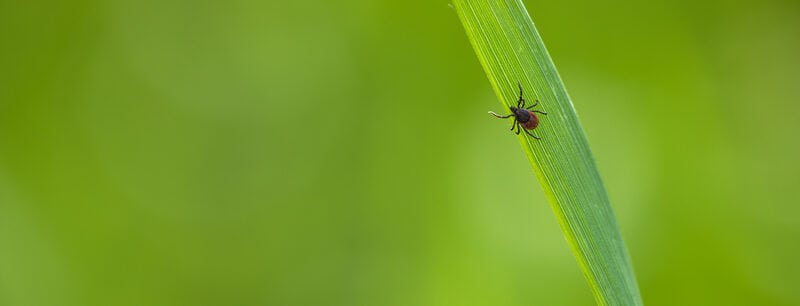
How to Prevent Tick Bites in Alabama: Yard, Clothing, and the Checks That Matter
Alabama ticks do not wait in trees. They wait at knee height along the edge of the yard, and the Lone Star tick — our most common one — actively walks toward you. Here is the layered approach that lowers bites: treated clothing, repellent, a yard that gives ticks nowhere to wait, and the two-hour rule.
The tick found on a child after an afternoon in the backyard, the one on the dog after a walk along the creek, the one you find on yourself two days after cutting the back line — every one of those started in the same place: a strip of tall grass, leaf litter, or brush at the edge of a mowed area, where the tick climbed up a stem and waited. Preventing tick bites in Alabama is mostly about making that strip a bad place to wait and making yourself a hard target to reach. This is the layered approach, from the yard inward.
Which ticks are we talking about?
Four matter in Alabama. The Lone Star tick is by far the most common; the female has a single white dot on her back, and unlike most ticks she does not just wait — she detects you and walks toward you. She is the tick behind alpha-gal syndrome, the red-meat allergy, and behind most of the tick-borne illness in this state. The American dog tick is larger, mottled, and the primary carrier of Rocky Mountain spotted fever in the Southeast. The blacklegged (deer) tick carries Lyme disease; it is less common in Alabama than in the Northeast but it is here, especially in wooded north Alabama. The Gulf Coast tick is expanding across the state. Species details, alpha-gal, and how a professional yard treatment works are in tick control in Alabama.
Layer 1: A yard that gives ticks nowhere to wait
Ticks need humidity and shade. They dry out and die in short, sunlit grass. That single fact drives the whole yard strategy.
- Mow, and mow the edges. Ticks quest from stems at knee height and below. A lawn cut short and kept short has almost none; the unmowed strip along the fence, the tree line, and the drainage ditch has almost all of them.
- Put a barrier between the lawn and the woods. A three-foot band of wood chips, gravel, or bare mulch between the mowed lawn and the tree line or brush is a dry zone ticks are reluctant to cross. This is the single most effective landscaping change for a wooded lot in Mt Laurel, Hampton Cove, or on Lake Martin.
- Move the play set and the seating into the sun. Swing sets, sandboxes, hammocks, and the fire pit chairs belong in open, sunny lawn, well away from the edge. Not under the shade tree next to the woods.
- Clear the leaf litter. Leaves piled under shrubs, along the fence, and behind the shed are tick nurseries. Rake them out in fall and again in spring.
- Stack firewood off the ground and in the sun. Woodpiles shelter the mice that carry the ticks that carry the disease.
- Discourage deer. Deer carry adult ticks into the yard and drop engorged females that lay thousands of eggs. Fencing where practical, and not planting the hostas and azaleas they love along the property line.
A professional tick treatment reinforces all of that by treating the edge zones — the transition band, the tree line, the shrub beds, the shaded foundation — where ticks actually quest. EnviroCare's Mosquito + Tick program treats those zones on a monthly cycle through the season and covers chiggers as well; tick-only treatment is quoted per property. It reduces the tick population in the treated areas substantially; it does not make a wooded yard tick-free, and we say so.
Layer 2: Clothing that ticks cannot get through
This is the layer most people skip, and it is the most effective one for anyone who works or plays at the yard edge, hunts, hikes, or fishes the creek banks.
- Permethrin-treated clothing. Permethrin is an EPA-registered insecticide for fabric — not skin — that kills ticks on contact with the cloth. You can buy pre-treated pants, socks, and shirts, or treat your own with a spray product, following the label. A treatment lasts through several washes. For a family that spends time in the woods, treated socks and pants are the best money you can spend on tick prevention.
- Long pants tucked into socks. Yes, it looks ridiculous. It forces the tick to climb the outside of your leg where you can see it instead of the inside where you cannot.
- Light colors. A tick on khaki is visible. A tick on dark jeans is not.
Layer 3: Repellent on skin
An EPA-registered repellent — DEET, picaridin, or oil of lemon eucalyptus — on exposed skin, applied as the label directs, for time spent in tall grass, brush, or woods. Picaridin is often preferred because it does not damage synthetic fabrics. Follow the label for children, and do not put repellent on hands, eyes, or mouth. Repellent is the layer for the trail, the deer stand, and the creek; the yard layers above are what make it unnecessary on the patio.
Layer 4: The two-hour rule and the tick check
Research on tick-borne disease consistently shows that a tick removed early is far less likely to transmit anything. The habits that make early removal routine:
- Shower within two hours of coming in from the yard edge or the woods. It washes off unattached ticks and gives you a full-body look.
- Check the places they go. Scalp and hairline, behind and inside the ears, the back of the neck, armpits, the waistband, the groin, the backs of the knees, and between the toes. Ticks seek warm, protected skin. Check children carefully — a Lone Star nymph is the size of a poppy seed.
- Tumble clothes in a dryer on high for ten minutes before washing. Dry heat kills ticks; a cold wash does not.
- Check the dog every time. Ears, between the toes, under the collar, around the tail. A dog on a veterinary tick preventive is protected; the ticks it carries into the house are not.
If you find one attached
Use fine-tipped tweezers. Grip the tick as close to the skin as possible and pull straight up with steady pressure — no twisting, no burning it, no petroleum jelly, no nail polish. Clean the site with soap and water or alcohol. Note the date. If a rash, fever, headache, or body aches develop over the next few weeks — or, hours after eating red meat, hives or stomach trouble that could point to alpha-gal — see a doctor and mention the tick. We are pest control, not medicine; take questions about symptoms to a physician.
When the yard is the problem
If the family is finding ticks after ordinary time in the backyard — not the woods, the yard — the edge zones need treatment on a schedule, and the landscaping changes above need to happen alongside it. That is what we do. We will walk the property with you, show you where the ticks are questing, and treat those zones through the season. Wooded lots in Chelsea, Madison, and around Dadeville are exactly what the program was built for.
Call the office nearest you — Birmingham (205) 991-2882, Alabaster (205) 940-6360, Lake Martin / Alex City (256) 234-6162, or Huntsville (256) 937-7676 — or request a free quote and we will take it from there.
No One Cares Like EnviroCare.
Ready to Schedule?
Call the EnviroCare office nearest you.