
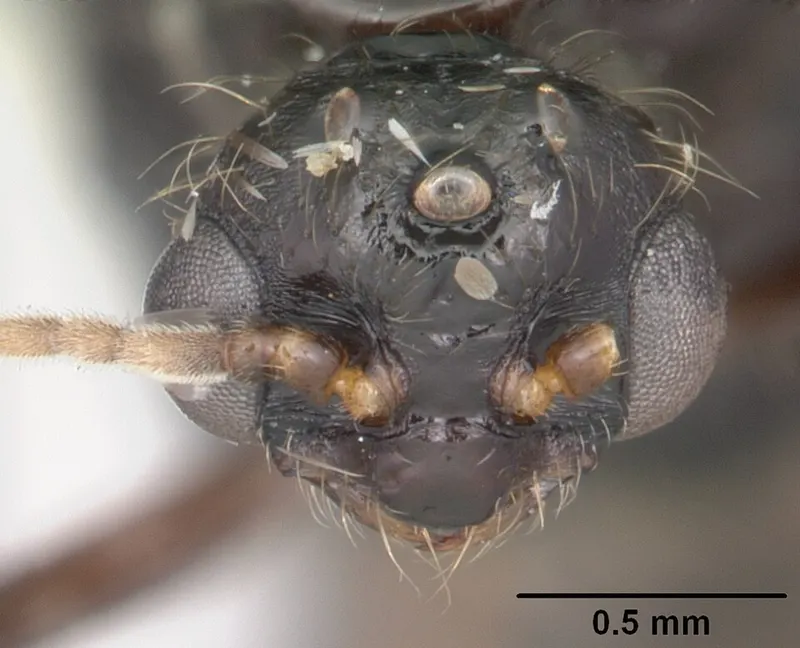
Sugar Ants in Your Alabama Home: Identification and Prevention
Sugar ant invasions explode across Alabama every June. Here's how to identify the species in your kitchen, stop the trail the right way, and keep them out.
“Sugar ants” describes small ants looking for food rather than a reliable species identification. Start by removing accessible food, noting where the trail enters and identifying the ant. If you use a bait, choose a product labeled for that pest and location and follow its directions. Persistent trails call for an inspection.
What are people calling sugar ants?
Homeowners use the name for several small ants seen around counters, pantry shelves or pet feeding areas. Color and size alone may not identify the species. Take a clear photograph and note whether activity starts at a window, plumbing opening or exterior door. Those observations help an inspector connect the trail to the conditions around it.
Do not identify a particular species just because ants return quickly or appear in several rooms. Those patterns call for investigation; they do not establish how many colonies exist or where they nest. Our Alabama household ant guide covers the broader identification and control process.
What should you check before choosing a treatment?
Look for food residue under countertop appliances, sticky containers, pet food and accessible rubbish. Check the cabinet below the sink for moisture and record any leak for repair. Trace the visible trail without opening electrical fittings or wall cavities. Keep children and pets away from products already placed.
Outside, check accessible door seals and places where vegetation contacts the house. Record the suspected entry point for the technician. Avoid disturbing hidden wiring or plumbing while attempting a repair; identify the route and ask about appropriate work first.
Why do identification and bait selection matter?
The UC IPM guide to household ants explains why identification, sanitation and entry-point management belong in the same plan. A product selected for the wrong ant or placed in the wrong location may not address the problem. Follow the directions for the particular product and treatment site.
There is no single bait or fixed waiting period that fits every ant problem. Keep a record of the products used and where activity continues. Before combining treatments, ask whether the proposed application interferes with an existing bait or treatment. Do not improvise mixtures from household cleaners or pesticides.
What does prevention look like day to day?
- Clean food spills and residue, including beneath small appliances.
- Store food in closed containers and manage pet feeding leftovers.
- Keep rubbish contained and correct accessible moisture problems.
- Inspect door seals and record recurring entry points.
- Report where activity persists instead of treating every room the same way.
Use cleaning methods appropriate for the surface and follow product directions. For an occupied home, preparation should account for people, pets and the particular treatment areas. Do not assume that more product or a stronger mixture improves the result.
When should you arrange an ant inspection?
Request an inspection when trails repeatedly return, the source is unclear, activity involves inaccessible spaces or previous treatments have not resolved the problem. There is no need to wait for an arbitrary deadline when the situation is worsening. Describe the locations and treatment history when you call.
An inspection connects identification with sanitation, entry-point repair and a treatment plan. Our pest control service page explains the approach, and our preparation checklist explains what to ask before a visit.
EnviroCare's family has worked in Alabama pest control since 1958, across four generations. Call (205) 940-6360, request an inspection or review current pricing and agreement terms.
Ready to Schedule?
Call the EnviroCare office nearest you.