
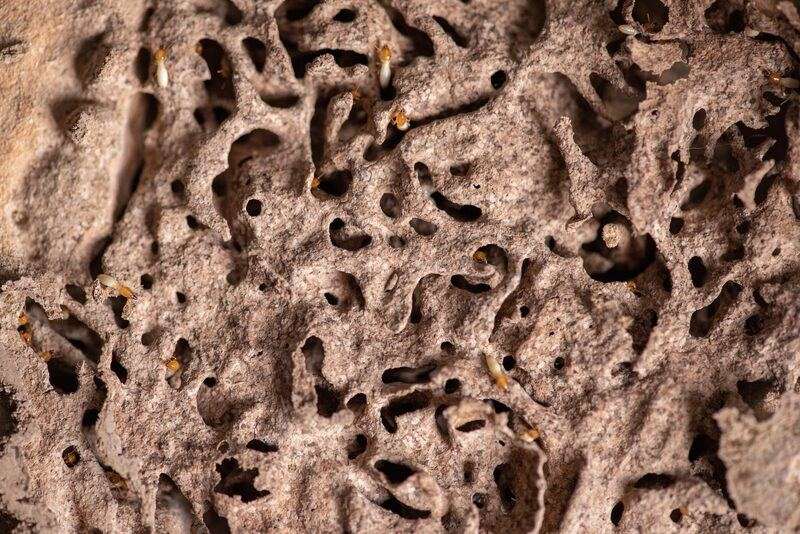
Sign of Termites in Your Home: What Termite Damage Looks Like in Alabama
Early termite damage does not look like an insect problem — it looks like a sticking door, bubbling paint, or a soft spot in the floor. Learn the common signs of a termite infestation in Alabama homes, where subterranean termites enter, how to tell termite damage from water damage, and when to call for an inspection.
Almost no one finds termite damage by seeing termites. They find it because a door that always closed fine now sticks in the frame, or the paint on a window sill bubbled, or a vacuum cleaner went through a baseboard. Subterranean termites — the species responsible for the large majority of termite infestations in Alabama — eat wood from the inside out and leave the surface intact, so by the time the surface fails, the damage behind it is usually well along. Knowing the warning signs of termites, and where to look for signs of their presence, is how you catch a termite problem while it is still a small repair instead of costly damage to your home.
What does the start of termite damage look like?
Early termite damage does not look like an insect problem. It looks like a maintenance issue — a sticking door, a bubble in the paint, a soft spot in the floor. That is because subterranean termites consume wood from the inside, hollowing out galleries along the grain while leaving the outer surface paper-thin. By the time a homeowner notices visible damage, a termite colony has typically been feeding inside the wall or under the floor for months or even years. The key is learning how to identify termite damage early and knowing which "maintenance issues" are actually a sign of termites — so you can act before the colony causes severe damage to the structural wood in your home. A single termite does no meaningful harm, but a colony of termites numbering in the tens of thousands eats around the clock.
Common signs of a termite infestation
Learn how to spot these warning signs before termites could cause significant damage. The common signs of a termite infestation include visible damage to wood, mud tubes on the foundation, discarded termite wings, and frass — but many of the earliest signs are easy to mistake for normal wear.
Doors and windows that stick or will not close
Often the very first sign of termites, and almost always misread as humidity. Termites eating a door frame or window frame produce moisture as they feed, and that moisture swells the wood. A door that rubs at the latch side, or doors and windows that suddenly bind when they never did before, is worth a close look — especially in a bathroom, a laundry room, or along an exterior wall on a slab foundation. If the sticking started without a weather change, termite damage to the frame is a real possibility and a sign of termite damage you should not ignore.
Blistered or bubbling paint
Termites working just behind a painted surface push moisture into the wood, and the paint lifts in blisters or peels in a way that looks like a slow water leak. On a wall or trim with no plumbing behind it and no roof above it, blistered paint is a sign of an infestation until proven otherwise. The damage often appears on baseboards, window sills, and door frames — anywhere the wood is close to the soil where termite colonies send their workers to find a food source. Termites like wood that is already softened by moisture, so blistered paint on a damp-side wall is a red flag.
Hollow-sounding wood
Tap along baseboards, door trim, window sills, and the bottom of door frames with a screwdriver handle. Sound wood has a solid thunk; termite-damaged wood sounds papery or hollow. Press a thumbnail or the tip of the screwdriver into a suspect spot — a thin painted skin over an empty gallery gives way with almost no pressure. Hollow-sounding wood happens because termites feed on the cellulose inside of wood, leaving only the outer shell. You may also notice damaged wood that crumbles easily or feels soft to the touch along the grain. Termites can eat through the wood so thoroughly that only a paper-thin shell remains. The classic discovery is a baseboard that crumbles when a piece of furniture is moved — a clear sign of a termite infestation that has been progressing within walls for months.
Sagging or spongy floors
In a crawlspace house — most of the older housing stock in Homewood, Mountain Brook, and old Alexander City — termites reach the floor system through the piers and the sill plate. A soft spot in the floor near a bathroom, a dip along an exterior wall, or wood flooring that buckles up in a line is often the first sign of a damaged sill or joist below. Subterranean termites can cause damage to the structural integrity of floor joists, and a sagging floor is a sign of serious structural damage that needs immediate inspection. Damage may appear in floors or walls at the same time when a colony is large. On a slab house, the same appears as a soft spot at the base of a wall where termites have eaten the stud bottom plate. Wood damage from termites in the floor system is one of the costliest types to repair.
Mud tubes on the foundation
The one sign of termites that is unambiguous. Subterranean termites build pencil-width mud tubes of soil and saliva to travel between the ground and the wood in your home without drying out. These shelter tubes protect termite workers from open air and predators as they tunnel between the colony in the soil and their food source inside the structure. The presence of termites is confirmed whenever you find mud tubes. Look for them on the outside of the foundation, on crawlspace piers and walls, on the inside of the foundation wall in a basement, up the side of a bath trap or plumbing penetration, and on the framing where a deck or porch attaches. A mud tube running up a pier is a colony feeding on the house right now. Do not knock it down — leave it for the inspector so they can determine the extent of the active termite infestation.
Discarded wings near doors and windows
A small pile of identical, translucent termite wings on a windowsill, in a spider web, or in a light fixture in late winter or spring. Termite swarmers — the reproductive members of the colony — leave the nest to mate and start new colonies. They shed their wings shortly after landing, and those discarded wings are often the first visible signs of a termite problem. The swarm itself happens in minutes and is easy to miss; the wings stay. If you see termite swarmers or find discarded wings indoors, the colony is in or under the house. Swarmers inside the home almost always signal an established termite infestation rather than a single scout.
Termite droppings and frass
Drywood termites — less common in Alabama than subterranean species but present in some coastal and southern areas — push small, sand-like pellets called frass out of tiny kick-out holes in the wood. Since drywood termites eat wood across the grain, their galleries look different from subterranean damage. A small pile of termite droppings below a hole in trim, a door frame, or a piece of furniture is a clear sign of drywood termites. Subterranean termites do not leave frass; instead, they leave faint meandering lines just under the paint on drywall, sometimes with tiny pinholes where they broke through and then plugged the hole with soil. Look low on walls and floors, near the floor line, around door and window openings, and along the ceiling where walls meet overhead framing.
Hidden termite damage behind walls
Some of the worst termite damage is entirely hidden. Termites eat wood from the inside out, which means the structural wood inside your walls can be severely compromised while the painted surface looks normal. Hidden termite damage is why a professional termite inspection matters — a trained pest management professional knows how to check inside your walls, behind trim, and in areas a homeowner would never think to look. By the time the damage is done and visible signs appear on the surface, the wood behind it may be hollowed out completely. If you have an older home, a crawlspace, or a property that has not had a termite inspection in more than a year, hidden damage is a real risk. Termites can also infest wood framing that is concealed by insulation, making detection even harder without professional equipment.
How fast do termites cause damage to a house?
A single subterranean termite colony can contain tens of thousands to several hundred thousand termite workers, all of which feed on wood 24 hours a day. A mature colony can consume roughly a linear foot of two-by-four lumber per year — which sounds modest until you consider that the colony has been feeding inside your walls for years before anyone notices the first sign of termites. Termites can cause significant damage before any visible signs appear on the surface. Formosan termites — an especially aggressive species confirmed across much of south and central Alabama — build even larger colonies, sometimes exceeding a million individuals, and can cause severe damage to structural wood in a matter of months rather than years.
The speed of termite damage depends on the size of the colony, the number of termite colonies feeding on the structure, the moisture content of the wood, and whether the home has any existing termite protection in place. Termites prefer moist, decaying wood, but they will feed on sound lumber when that is what they reach. The honest answer to "how long before termites destroy a house?" is that structural failure takes years, but costly damage — a sill plate that needs replacing, a set of floor joists that need sistering — can accumulate in a single year of undetected feeding. An infestation can lead to thousands of dollars in structural repair due to termites eating wood that you never see. That is why an annual termite inspection matters: it closes the gap between when termites arrive and when you find out.
Different types of termite damage
Not all termite damage looks the same, because different termite species feed on wood in different ways and eat through different parts of the structure. Knowing the type of termite helps a pest control professional recommend the right termite treatment.
- Subterranean termite damage follows the soft grain of the wood, leaving layered galleries packed with dried mud and soil. The damaged wood looks honeycombed when cut open, with tunnels running along the grain. This is the most common type of termite damage in Alabama homes, caused by eastern subterranean termites that nest in the soil and enter the structure through mud tubes at the foundation. Subterranean termites need soil contact and moisture, so damage typically starts low — at sill plates, bottom plates, and floor joists. Subterranean termites can cause damage that compromises load-bearing walls and floors if left unchecked.
- Drywood termite damage produces clean, smooth galleries that cut across the grain. Drywood termites do not need soil contact and can infest wood anywhere in the structure — furniture, roof framing, window headers, even the ceiling. Their presence is marked by frass pellets and kick-out holes rather than mud tubes. Termites can eat through hardwood and softwood alike, though they prefer softer species.
- Formosan termite damage can be dramatically faster and more extensive. Formosan termites build large carton nests — mixtures of soil, chewed wood, and saliva — inside walls and floors, sometimes above ground level. A Formosan colony does not need a continuous connection to the soil the way other subterranean termites do, which means damage can appear higher in the structure and spread faster. Formosan termites are the most destructive pest in Alabama's termite population.
Termite damage vs. water damage — how to tell the difference
Termite damage and water damage overlap, and termites are drawn to wet, decaying wood in the first place, so a house can have both. Knowing how to tell termite damage from water damage or wood rot helps you decide whether you need a plumber, a professional pest control company, or both.
- Galleries and tunnels. Cut into termite-damaged wood and it is honeycombed with layered tunnels running along the grain, often packed with dried mud. Wood rot from water damage is soft and crumbly through and through, without the tunnel structure. If you see mud inside the wood, that is termite damage — water damage does not leave mud.
- Location pattern. Water damage tracks a source — a roof leak, a window, a plumbing line. Termite damage tracks the ground: it starts low and works up, worst at sill plates, bottom plates, door thresholds, and pier tops. Damage that starts at the base of a wall and works upward through the structural wood is a strong indicator of subterranean termites.
- Frass vs. mold. Small piles of dry, sand-like termite droppings below a hole in wood are a sign of drywood termites. Water-damaged wood grows mold or fungus on the surface. Both are problems; only one involves a pest that is actively consuming wood in your home.
- Mud tubes. The presence of mud tubes anywhere on the foundation, piers, or framing is conclusive evidence of subterranean termites. Water damage never produces tubes.
When in doubt, it does not matter which one it is: both need a licensed inspector, and the free WDO inspection identifies both. We walk through the inspection process and what the WDO letter covers in our WDO letter guide.
Where to check for sign of termites in an Alabama house
Knowing where subterranean termites are most likely to enter helps you catch termite activity in your home early — before the colony causes structural damage. Termites could be feeding in any of these locations right now without any visible sign on the surface.
- The bath trap. The plumbing access under a slab-house bathtub is an open path from the soil to the framing, and it is the single most common termite entry point in slab construction across Hoover, Madison, and every subdivision built since the seventies.
- Crawlspace piers and sill plates. With a flashlight, from the access door, look for mud tubes on every pier and along the sill where the house sits on the foundation. Check for damaged wood, soft spots, and any sign of active termite activity on the structural framing.
- Exterior door frames and garage door jambs. Any wood in contact with a slab or a concrete stoop is a food source for termites. Press on the door frame — if it gives, termites could already be eating the wood from the inside.
- Deck and porch ledger boards. Where the deck bolts to the house, especially if the deck posts sit in or near soil. Termite colonies that establish under a deck have a direct path to the house framing.
- Window sills on the ground floor, particularly on the shaded, damp side of the house where moisture and decaying wood attract termite colonies looking for a food source.
- Anywhere wood touches soil. Fence posts against the house, lattice, a wood stoop, mulch piled above the slab line, siding that runs into the dirt — all of these provide direct access for termites to reach the wood and start feeding. Termites prefer like wood that is already in contact with the soil.
What month are termites most active?
In Alabama, termites feed year-round — the colony does not hibernate. But two seasonal patterns matter for homeowners. Termite swarmers typically appear between late February and May, when mature termite colonies send out reproductives to start new colonies. If you see termite swarmers or discarded wings inside your home during this window, there is an active colony nearby. The second peak is feeding activity, which accelerates from late spring through fall as soil temperatures rise and the colony grows. Formosan termites swarm later than eastern subterranean termites, typically May through June, and often at night around lights — they shed their wings near the light source, so piles of discarded wings near a porch light or window are a telltale sign.
The practical takeaway: there is no "off season" for termite damage in Alabama. The colony eats wood every month of the year, and an annual termite inspection should happen regardless of when you last checked.
Can you ever fully get rid of termites?
Yes — but only by eliminating the entire termite colony, including the queen. That is the critical distinction between termite control methods. A liquid soil treatment creates a chemical barrier around the foundation that kills or repels foraging termite workers, but the colony in the soil may survive and find a way around the barrier. Termites may find gaps in the treated soil and resume feeding. Bait systems like Sentricon® work differently: termite workers find the bait stations, carry the active ingredient back to the colony, and share it through normal feeding behavior until the entire colony — queen and all — is eliminated.
Once a colony is eliminated, it cannot reinfest. But Alabama has millions of termite colonies in the soil, and a new colony can forage into the same area within a season. That is why ongoing termite protection and termite control — not a one-time termite treatment — is what keeps a home termite-free. We compare the two main approaches in Sentricon vs. liquid termite treatment and cover the protection plans available in is Sentricon worth it.
When to call a pest control professional
Call a professional pest control company or pest management professional for a termite inspection when any of these apply:
- You see any sign of termites described above — mud tubes, discarded wings, hollow-sounding wood, sticking doors and windows, frass, or blistered paint near the foundation.
- You find damaged wood that is honeycombed or packed with mud — this is structural damage that needs professional evaluation.
- Your home has had a previous termite infestation and you are not sure whether your current termite protection is still active.
- It has been more than 12 months since your last termite inspection — an active termite infestation can develop between annual checks.
- You are buying or selling a home and need a WDO inspection.
Do not spray the mud tube or tear out the trim. Both destroy the evidence the inspector needs to judge how active and how extensive the termite problem is. Photograph it, leave it undisturbed, and schedule the inspection. Termite damage is slow enough — the colony takes years, not weeks — that there is time to get a proper evaluation rather than a rushed decision.
If termite treatment is needed, the Sentricon® Always Active™ bait system protects the structure with in-ground stations and no drilling, and qualifying homes on an EnviroCare protection agreement carry up to $1,000,000 in damage repair coverage provided by EnviroCare, subject to the terms of the agreement. That is the difference between finding termite damage on a protected house and an unprotected one: on a protected house, the repair is covered. Protect your home before the colony causes costly damage. The broader questions — bonds, cost, insurance — are in our related guides.
Frequently asked questions about termite damage
How long before termites destroy a house?
Complete structural failure from a termite infestation takes many years, but significant and costly damage can develop within 12 to 18 months of a colony reaching the structure. A mature subterranean termite colony eats roughly a linear foot of two-by-four per year; Formosan termite colonies feed on wood far faster. The real risk is not that termites will destroy a house overnight — it is that they will feed undetected inside your walls for years, causing thousands of dollars in structural damage before anyone finds the first sign of termites.
What does the start of termite damage look like?
The earliest visible signs of a termite infestation are usually doors or windows that start sticking, blistered paint on trim or baseboards near the foundation, or a soft spot in a floor or wall. These look like normal wear or water damage, which is why termite damage goes unnoticed for so long. Mud tubes on the foundation are the most definitive early sign of termite damage — they confirm that subterranean termites are actively traveling between the soil and the wood in your home.
Can you ever fully get rid of termites?
Yes. A colony elimination system like Sentricon® targets the queen and the entire termite colony through bait that termite workers carry back to the nest. Once the colony is eliminated, it cannot return. However, new colonies can move into the same area, so continuous termite protection — monitoring and active bait stations — is what keeps a home termite-free long-term. Protect your home with ongoing termite treatment rather than relying on a one-time fix.
What month are termites most active?
Termites feed year-round in Alabama, but swarmers — the winged reproductives that leave the colony to start new colonies — are most visible from late February through May. Formosan termites swarm later, typically May through June. Feeding activity peaks in warm months but never stops entirely. There is no safe season to skip a termite inspection. Termite control technicians recommend annual inspections regardless of the season.
Protect your home — start with a free termite inspection
The most expensive termite damage we see is in homes that had no sign of termites anyone noticed, because no one was looking. An annual termite inspection is what turns "we never had a problem" into a fact instead of a hope. If it has been more than a year — or if you have spotted any of the signs of a termite infestation described above — let us take a look. Our inspection is free, and it is the same inspection that produces the WDO letter a home sale requires.
Call the office nearest you — Birmingham (205) 991-2882, Alabaster (205) 940-6360, Lake Martin / Alex City (256) 234-6162, or Huntsville (256) 937-7676 — or request a free termite inspection online.
No One Cares Like EnviroCare.
Ready to Schedule?
Call the EnviroCare office nearest you.