
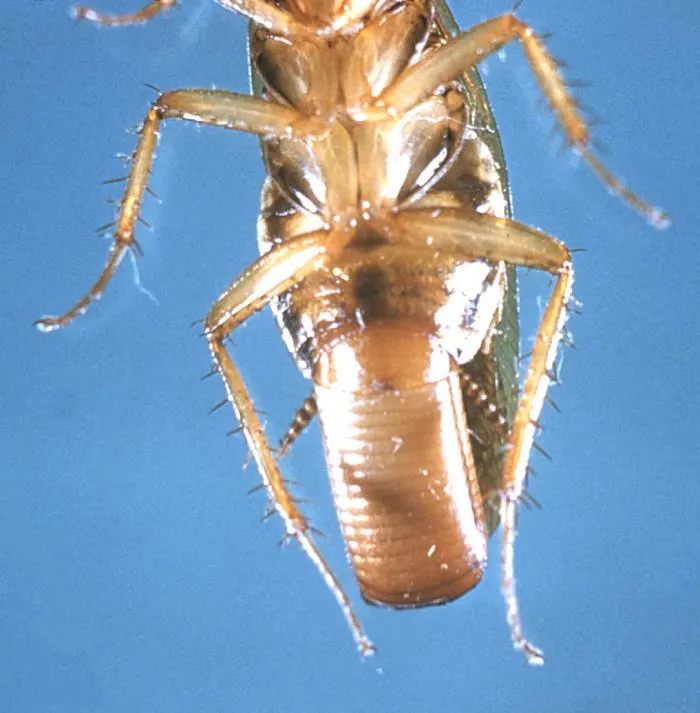
Do Bug Bombs Work? Why Foggers Usually Make an Alabama Pest Problem Worse
A total-release fogger promises to clear the whole house in four hours. What it actually does is mist the open surfaces where pests are not, drive them deeper into the walls, and leave a residue that makes real treatment harder. Here is why, and what to do instead for roaches, fleas, and ants.
The fogger is on the shelf at every hardware store in Alabama, it costs less than a pizza, and the box says it clears a whole room. We get the call about six weeks after someone uses one, and the problem is almost always bigger than before. A bug bomb is the single most common way a manageable roach or flea problem turns into one that has spread through the house. Here is why, and what works instead.
What a fogger actually does
A total-release fogger sprays a fine mist of insecticide upward, and the mist settles on whatever is exposed: countertops, the tops of furniture, the floor in the middle of the room. Pests do not live there. Roaches live in the crack behind the stove, inside the hinge of a cabinet door, under the sink around the plumbing, inside the dishwasher door. Fleas live as eggs and larvae deep in carpet fibers and under the edge of the sofa. The mist does not get into any of those places in any meaningful amount. What it does reach is the open surfaces you and your family use.
Why the problem spreads
The insecticide in most foggers is a repellent. Roaches detect it and move away from it — deeper into the wall void, up into the next floor, into rooms they had not colonized. A kitchen problem becomes a whole-house problem. Then the residue on every surface repels them from the bait you put out the following week, so the one method that actually reaches the harborage stops working. This is the sequence we see over and over: fogger in March, roaches in three bathrooms by May, bait that they will not touch, and a call in June.
The fire and health part
The propellant is flammable. Foggers set off by a pilot light, a water heater, or a spark from a refrigerator compressor are a documented cause of house fires, and using more than one in a room, or one in a room too small for it, is how that happens. The product also has to dry and the house has to be aired out before anyone goes back in, and it settles on food-prep surfaces, toys, and pet bowls. There is a reason professional treatment is placed in cracks and voids and not broadcast into the air of a kitchen.
What to do instead
For roaches: sanitation and water first, then gel bait placed in the cracks where they live, plus a growth regulator that stops nymphs from maturing. No spraying near the bait. The order is in how to get rid of roaches. For fleas: treat the pet with a veterinary product, vacuum daily for two weeks and empty the canister outside, wash bedding hot, and treat the carpet and upholstery with a product that includes a growth regulator — the eggs and larvae are the population, and a fogger does not reach them. For ants: never a fogger; bait, and the steps in getting rid of ants in the house.
When to call
If you have already used a fogger and the problem spread, say so when you call — it changes the plan. Interior roach and flea work is part of EnviroCare's pest program, with bait, growth regulators, and a scheduled follow-up for the generation that hatches after the first visit. It is slower than a fogger promises and it is the only approach that ends.
Call the office nearest you — Birmingham (205) 991-2882, Alabaster (205) 940-6360, Lake Martin / Alex City (256) 234-6162, or Huntsville (256) 937-7676 — or request a free quote and we will take it from there.
No One Cares Like EnviroCare.
Ready to Schedule?
Call the EnviroCare office nearest you.