
How to Get Rid of Roaches in Alabama: Types of Cockroaches, Cockroach Control, and Pest Control for Alabama Homes
Alabama homeowners deal with more types of cockroaches than almost any other state. Roaches thrive in Alabama homes year-round because of the humid climate. Learn how to identify the cockroach species in your home, recognize a cockroach infestation, and get professional cockroach control that works.
Alabama homeowners deal with more types of cockroaches than almost any other state in the country, and roaches thrive in Alabama homes year-round because of the warm, humid climate that makes this region one of the highest cockroach pressure zones in the United States. Whether you are finding one roach in the kitchen at midnight or seeing roaches during the day — a sign that cockroach populations have outgrown their hiding spots — getting rid of cockroaches starts with identifying which types of roaches in Alabama you are dealing with and understanding what attracts roaches to your home. This guide covers every cockroach species common in Alabama, the signs of a cockroach infestation, health risks, what actually works for cockroach control, and when DIY cockroach control is not enough and you need professional pest control.
Types of cockroaches found in Alabama homes
Alabama is home to several cockroach species, and knowing which types of cockroaches you are dealing with determines whether the cockroach problem is an outdoor perimeter issue or an indoor infestation that requires interior treatment. Here are the types of roaches in Alabama that pest control technicians encounter most often.
American cockroach. The American cockroach — the "palmetto bug" — is the largest roach found in Alabama homes. Adults are reddish-brown, an inch and a half or longer, and they fly. American roaches live outdoors in sewers, storm drains, mulch beds, and crawl spaces, and they come inside through drains, basement entry points, and gaps in the foundation when summer heat or heavy rain pushes them toward food and water sources indoors. You typically see American cockroaches one at a time in the bathroom, garage, laundry room, or basement. They do not establish permanent indoor cockroach populations the way German roaches do.
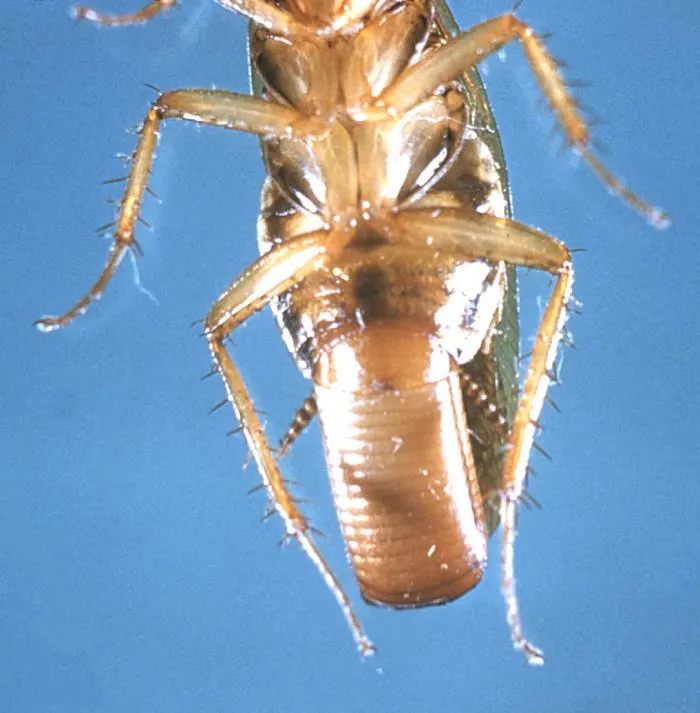
German cockroach. The German cockroach is the most problematic cockroach species for Alabama homeowners. Adults are small — about half an inch long — light brown with two dark stripes behind the head. German roaches breed exclusively indoors, in kitchens and bathrooms close to food and water sources. A single female can produce hundreds of nymphs in a year, and German roaches breed so rapidly that a small roaches problem in spring becomes a severe cockroach infestation by summer. German cockroaches live in cracks and crevices behind appliances, inside cabinets, under the sink, and around plumbing — hiding spots that over-the-counter sprays cannot reach. If you are seeing small roaches with two dark stripes in the kitchen, read our detailed guide on German cockroaches in Alabama.
Smokybrown cockroach. Smoky brown cockroaches are glossy dark mahogany, about an inch long, and strongly attracted to exterior lighting. They live in tree holes, leaf-filled gutters, woodpiles, and attics. Smoky brown cockroaches are primarily outdoor insects that enter homes through attic vents, soffits, and gaps around doors and windows, especially on warm, humid Alabama evenings. They need high moisture to survive and are most common in damp areas around the foundation, in crawl spaces, and in garages.
Oriental cockroach. Oriental cockroaches — sometimes called water bugs — are shiny, dark brown to black, and about an inch long. Oriental roaches are strongly associated with moisture and are found in basements, crawl spaces, drains, and damp areas around plumbing. They move more slowly than other cockroach species and prefer cooler, wetter environments than American or German cockroaches. Oriental cockroaches often enter Alabama homes through floor drains, utility penetrations, and gaps in the foundation where moisture collects.
Brown-banded cockroach. Brown-banded cockroaches are small — similar in size to German cockroaches — but lighter in color with distinctive tan bands across the wings. Unlike German roaches, brown-banded cockroaches do not need as much moisture and can be found throughout the house, not just in kitchens and bathrooms. They prefer warmer, drier spots — behind picture frames, inside electronics, in closets, and behind appliances. Brown-banded cockroaches are less common in Alabama than German or American cockroaches but are occasionally found in homes and apartments.
Asian cockroach. The Asian cockroach looks almost identical to the German cockroach — same size, same light brown color, same two dark stripes — but it behaves completely differently. Asian cockroaches live outdoors in leaf litter, mulch, and shaded lawns, and they are strong fliers attracted to lights. Smoky brown and Asian cockroaches are both drawn to porch lights on warm Alabama evenings, but Asian cockroaches fly directly toward the light and into the house through open doors. They do not infest indoors the way German cockroaches do. If the small roaches you are seeing are flying toward lights outdoors, they are likely Asian cockroaches rather than German.
For a deeper look at the three most common species and how each one is treated, see our guide to cockroach control in Alabama.
Why roaches thrive in Alabama homes
Alabama sits in a humid subtropical climate zone, and that climate is the reason roaches thrive in Alabama homes more than in most of the country. Cockroaches need warmth, moisture, and food to survive, and Alabama provides all three in abundance.
Humidity. Alabama's high humidity — especially from April through October — creates the damp conditions cockroaches need. Crawl spaces, basements, bathrooms, and areas around plumbing stay humid enough for cockroaches to thrive even in air-conditioned homes. The moisture that collects under sinks, behind dishwashers, and around leaking pipes provides the water sources roaches depend on.
Warm temperatures year-round. Alabama winters are mild enough that outdoor cockroach species — American, smokybrown, and Asian cockroaches — remain active through most of the year. German cockroaches live entirely indoors and breed year-round regardless of season, but the warm Alabama climate means outdoor roach pressure on your home never fully stops the way it does in northern states.
Abundant food sources. Alabama's long growing season, dense vegetation, and outdoor lifestyle mean more organic material around homes — mulch beds, leaf litter, compost, pet food left outside, open garbage — that feeds outdoor cockroach populations near the foundation. Indoors, the food sources that sustain roaches are the ones most homeowners overlook: grease behind the stove, crumbs under the toaster, residue in drains, pet food in open bags, and cardboard stored in garages and pantries.
The combination of the humid climate, mild winters, and available food and water sources is why Alabama homeowners deal with cockroach problems year-round — and why professional cockroach control in Alabama requires ongoing treatment rather than a one-time spray.
What attracts roaches to your Alabama home
Understanding what attracts roaches is the first step in any cockroach control program. Roaches are drawn to three things — moisture, food, and shelter — and your home provides all three if conditions are right.
- Moisture and water sources — dripping faucets, condensation under the sink, leaking pipes, standing water in drip pans, damp crawl spaces, and humid basements. Moisture is the single biggest attractant, especially for American cockroaches, oriental cockroaches, and camel crickets that share the same damp areas.
- Food sources — grease on the stove hood, crumbs under appliances, pet food left in the bowl overnight, open food containers, trash without a lid, and residue in drains and garbage disposals. Even a clean kitchen can have food sources in cracks and behind cabinets that sustain a cockroach population.
- Clutter and cardboard — boxes, paper bags, and stored items in garages, basements, and closets provide hiding spots where cockroaches harbor and breed undisturbed. Cardboard is both shelter and a food source for roaches.
- Entry points — gaps under doors, cracks in the foundation, unsealed utility penetrations, torn vent screens, and gaps around plumbing where pipes enter the wall. American roaches, smokybrown cockroaches, and oriental roaches enter through these openings from outdoors.
- Exterior lighting — porch lights and landscape lighting attract field crickets, Asian cockroaches, and smokybrown cockroaches to your entry points at night. Switching to yellow or amber bulbs reduces the attraction.
- Shared walls in apartments and duplexes — German cockroaches travel through shared walls, plumbing chases, and utility penetrations between units. A cockroach infestation in one unit can spread to every connected unit through shared walls if the building is not treated as a whole.
Signs of a cockroach infestation in your Alabama home
Cockroaches are nocturnal, so the signs of a cockroach infestation often appear before you see a live roach. Alabama homeowners should watch for these indicators of cockroach activity, especially in kitchens and bathrooms, behind appliances, and in basements and crawl spaces.
- Droppings — small dark specks or smears that look like ground pepper, concentrated along drawer edges, behind appliances, on cabinet shelves, and near the sink. German cockroach droppings are particularly small; American cockroach droppings are larger and ridged.
- Egg cases — small, ridged, tan capsules about a quarter-inch long. German cockroaches carry the egg case until the nymphs hatch. Finding egg cases behind the refrigerator, in drawers, or under the sink confirms an active, breeding cockroach population.
- Musty odor — a distinctive, oily smell that cockroaches produce from glandular secretions. In a heavy infestation, the odor is noticeable when you open a cabinet or pull out a drawer.
- Shed skins — cockroach nymphs molt several times as they grow, leaving behind translucent shed skins in the areas where cockroaches hide.
- Seeing roaches during the day — seeing roaches during the day is one of the most serious signs of a cockroach infestation. Cockroaches are nocturnal, so a roach visible in daylight means the cockroach populations have outgrown the available harborage and the infestation is significant. Act fast if you are seeing roaches during the day — the problem is already large.
- Many roaches when you turn on a light at night — roaches scatter for cracks and crevices when a light comes on. If you see many roaches in the kitchen at night, the population is established and growing.
Health risks of a cockroach infestation for Alabama homeowners
Cockroaches are more than a nuisance — a cockroach infestation poses real health risks, especially for children, elderly family members, and anyone with respiratory conditions. Understanding these health risks is one more reason Alabama homeowners should act fast when signs of a roach infestation appear.
Cockroach allergens trigger allergic reactions and asthma. Proteins from cockroach droppings, shed skins, saliva, and body parts are documented asthma triggers. Cockroach allergens trigger allergic reactions including nasal congestion, skin rash, and watery eyes, and they are a significant cause of respiratory problems in children, particularly in apartments and multi-family housing where German cockroach populations are dense. The American Lung Association identifies cockroach allergen as a major indoor air quality concern.
Contamination of food and surfaces. Cockroaches live in drains, trash, and sewers, then crawl across kitchen counters, inside cabinets, and over food preparation surfaces. They carry bacteria including Salmonella and E. coli on their bodies and in their droppings. A cockroach infestation in the kitchen means every surface the roaches contact is potentially contaminated.
A roach infestation is not an emergency room situation for most households, but the health risks are real and cumulative — and they are especially serious in homes with children or anyone with asthma or respiratory problems. Getting rid of cockroaches promptly is a health decision, not just a comfort one.
How to get rid of cockroaches — DIY cockroach control that works
Most DIY cockroach control fails because homeowners reach for the wrong product — foggers and aerosol sprays — which scatter cockroaches into new areas and make the cockroach problem worse. Here is the approach that actually works for getting rid of roaches, in the order that matters.
1. Eliminate moisture and water sources. Fix dripping faucets, repair leaking pipes under the sink, dry the sink at night, empty pet water bowls overnight, and check the dishwasher gasket and refrigerator drip pan. Roaches can survive weeks without food but only days without water. Eliminating water sources is the single most impactful step in any roach control solution.
2. Remove food sources. Clean grease from the stove hood and behind the range, sweep crumbs from under appliances, seal pet food in airtight containers, put a lid on every trash can, and break down cardboard immediately. Store food in sealed containers. These steps do not kill roaches, but they make bait far more attractive and starve the cockroach populations between treatments.
3. Stop using foggers and sprays. Bug bombs fill the room with mist that never reaches the cracks where cockroaches live. The repellent effect drives roaches deeper into walls and into rooms they had not colonized. Then the residue repels them from the bait you place afterward. Foggers make cockroach infestations worse. Do not use them.
4. Use gel bait placed in harborage areas. Gel bait is the DIY cockroach control product that actually works. Place small dots of gel bait in the cracks and crevices cockroaches use — inside cabinet hinge corners, under the sink at plumbing penetrations, behind the stove, under the refrigerator, inside drawer runners, and at the back of pantry shelves. Roaches eat the bait, return to the harborage, and the active ingredient spreads through the population. Do not spray anywhere near the bait — spray residue repels roaches from the bait and defeats the purpose.
5. Seal entry points. Sealing entry points prevents outdoor cockroach species from entering your home. Caulk gaps around pipes, cables, and utility penetrations. Install or replace door sweeps. Seal the garage door bottom, especially the corners. Cover weep holes with stainless mesh inserts. Fix torn crawlspace vent screens. Our full checklist is in fall pest-proofing your Alabama home.
6. Reduce outdoor harborage. Pull mulch beds back from the foundation. Clear leaf litter and debris from the perimeter. Stack firewood away from the house. Trim branches touching the roof. These steps reduce the outdoor cockroach populations that press against your home.
For an occasional American cockroach or smokybrown cockroach wandering in from outside, these steps usually end the problem within two to three weeks. For a German cockroach infestation — small roaches in the kitchen in numbers — DIY cockroach control works as a first step but rarely eliminates the population completely.
Why roaches are tough to eliminate without professional treatment
Even with diligent DIY cockroach control, many Alabama homeowners find that the cockroach problem persists — especially with German cockroaches. Several factors make roaches tough to eliminate on your own.
German roaches breed faster than baits can kill. A single female German cockroach produces an egg case every few weeks, each holding thirty to forty eggs. German roaches breed so rapidly that the population can outpace a homeowner's bait placement if any harborage areas are missed.
Cockroaches live in places you cannot reach. German cockroaches live deep inside wall voids, behind appliance motor housings, inside the hinge side of cabinet doors, and inside dishwasher door panels. Cockroaches live in these protected spots where store-bought products never reach.
Insecticide resistance. Cockroach populations — particularly German cockroaches — have developed resistance to multiple insecticide classes over decades of exposure. Some cockroach populations have even learned to avoid the sugar formulations used in older gel baits. Roaches are tough to eliminate when the same active ingredient is used repeatedly.
Shared walls spread the problem. In apartments, duplexes, and townhomes, cockroaches travel between units through shared walls, plumbing, and electrical chases. You can treat your unit perfectly and still have cockroaches reinfest from a neighbor. Building-wide treatment is the only roach control solution for multi-unit housing.
Egg cases survive most treatments. The egg case protects developing nymphs from most insecticides. Without a follow-up treatment timed to catch the generation that hatches from protected egg cases, the infestation returns within weeks.
Professional cockroach control for Alabama homeowners
Professional pest control for cockroaches starts with identifying the cockroach species and locating the harborage areas where roach populations are concentrated. A pest management technician inspects behind appliances, inside cabinets, under the sink, in the basement, in crawl spaces, and in every crack and crevice where cockroaches hide — mapping cockroach activity before placing a single treatment.
For a German cockroach infestation, professional treatment includes gel bait placed directly in harborage areas, an insect growth regulator that stops nymphs from maturing into breeding adults, and a follow-up visit timed to catch nymphs hatching from protected egg cases. Growth regulators are what turn a temporary knockdown into lasting cockroach control — within weeks you see distorted, sterile adults, and then you stop seeing new nymphs. This integrated approach is what separates professional cockroach control services from store-bought sprays.
For outdoor cockroach species — American cockroaches, smokybrown cockroaches, and oriental roaches — the cockroach control solution is a perimeter barrier treatment along the foundation, around door and garage thresholds, and at utility penetrations, combined with granular treatment in mulch beds and exterior harborage areas.
EnviroCare's bi-monthly pest plan covers cockroaches and 30-plus other common Alabama pests, starting at $35 a month with a $75 initial service and free re-service between visits. Perimeter treatment intercepts outdoor cockroach species before they reach your entry points. For homes dealing with a German cockroach infestation, the first visit is an interior visit targeting the specific cabinets, appliances, and cracks and crevices where roaches are active. If anything shows up between scheduled visits, we come back at no extra charge.
How to keep roaches out of your Alabama home for good
Prevention is the long-term cockroach control strategy that keeps roaches from coming back after professional treatment. These steps address the conditions that attract cockroaches and reduce the risk of reinfestation.
- Fix leaks and control moisture — repair dripping faucets, fix leaking pipes, and improve ventilation in crawl spaces and basements. Reducing moisture in damp areas eliminates the primary attractant for cockroaches.
- Store food in sealed containers — do not leave open packages, bread, or fruit on the counter overnight. Seal pet food and pick up bowls at night.
- Clean behind appliances regularly — pull out the stove, refrigerator, and microwave and clean the grease and crumbs that accumulate. These hidden food sources sustain cockroach populations between treatments.
- Seal cracks and crevices around the foundation and plumbing — sealing entry points is one of the most effective long-term cockroach prevention measures. Caulk gaps around pipes, close openings where cabinets meet walls, and seal around utility penetrations.
- Break down cardboard immediately — cardboard boxes from deliveries and grocery stores are how German cockroaches enter most homes. Get cardboard out of the house promptly.
- Inspect used appliances and furniture — check behind and underneath for live roaches, egg cases, and droppings before bringing a used item inside.
- Reduce exterior harborage — keep mulch beds thin and pulled back from the foundation, clear leaf litter, and stack firewood away from the house.
- Switch exterior lights to yellow or amber bulbs — reducing the light that attracts smokybrown and Asian cockroaches to your entry points reduces nighttime cockroach pressure.
Frequently asked questions about roaches in Alabama
Does Alabama have a roach problem?
Yes — Alabama has one of the worst cockroach problems in the country. The state's humid subtropical climate, mild winters, and long warm season create ideal conditions for multiple cockroach species. American cockroaches, German cockroaches, smokybrown cockroaches, oriental cockroaches, brown-banded cockroaches, and Asian cockroaches are all found in Alabama. The humid climate means roaches thrive in Alabama homes year-round, and the warm, moisture-rich environment supports larger cockroach populations than drier or colder states.
What gets rid of roaches immediately?
No product gets rid of cockroaches immediately. Gel bait produces the fastest results for an established cockroach population — you should see a significant drop in cockroach activity within the first week of properly placed bait, with a clean kitchen in four to six weeks for a typical German cockroach infestation. Professional treatment with gel bait, growth regulators, and a timed follow-up is the fastest roach control solution available. Foggers and aerosol sprays appear to kill roaches on contact but scatter the population and make the infestation worse overall.
What smell do roaches hate the most?
There is no scientifically proven scent that reliably repels cockroaches from a home. Peppermint oil, cedar, and other essential oils may discourage individual roaches temporarily, but they do not control a cockroach population or prevent a cockroach infestation. Effective cockroach control requires eliminating food and water sources, sealing entry points, and using targeted bait — not scent-based repellents.
What will 100% kill roaches?
No single product guarantees 100% cockroach elimination, because cockroach populations develop resistance to insecticides over time and egg cases protect developing nymphs from most treatments. The closest to a complete solution is professional cockroach control that combines gel bait in harborage areas, an insect growth regulator to break the breeding cycle, a follow-up visit to catch hatching nymphs, and ongoing sanitation and moisture control by the homeowner. This integrated pest management approach eliminates established cockroach infestations more reliably than any single product.
Why do I keep seeing roaches after spraying?
Spraying is the most common reason cockroach problems persist. Aerosol sprays and foggers kill roaches on contact surfaces but never reach the cracks, crevices, and wall voids where cockroaches actually live. Worse, the repellent residue drives cockroaches deeper into hiding and into rooms they had not colonized, spreading the cockroach infestation. If you keep seeing roaches after spraying, stop spraying and switch to non-repellent gel bait placed directly in the harborage areas where cockroaches hide.
Can one roach mean an infestation?
One roach does not necessarily mean an infestation — a single American cockroach or smokybrown cockroach that wandered in from outside is common in Alabama and does not indicate an indoor population. However, one German cockroach — a small, tan roach with two dark stripes found in the kitchen or bathroom — almost always means there are many more hiding behind appliances and in cabinets. If the roach you found is small and was in the kitchen, act fast and inspect behind the refrigerator and under the sink for droppings and egg cases.
Cockroach control services in Birmingham, Huntsville, and across Alabama
EnviroCare Pest Services — family-owned since 1958, fourth generation — provides cockroach control, pest control service, and full pest management across central and north Alabama. Whether you are dealing with American cockroaches in the basement, German roaches in the kitchen, or smokybrown cockroaches coming in from the yard, we identify the cockroach species, locate the harborage, and apply targeted professional treatment. A home inspection is the first step toward getting rid of cockroaches for good.
Call the office nearest you — Birmingham (205) 991-2882, Alabaster (205) 940-6360, Lake Martin / Alex City (256) 234-6162, or Huntsville (256) 937-7676 — or request a free quote online.
No One Cares Like EnviroCare.
Ready to Schedule?
Call the EnviroCare office nearest you.